

-
Download
Certificate Query
Certificate Query

 2026/10/19 17:44:54
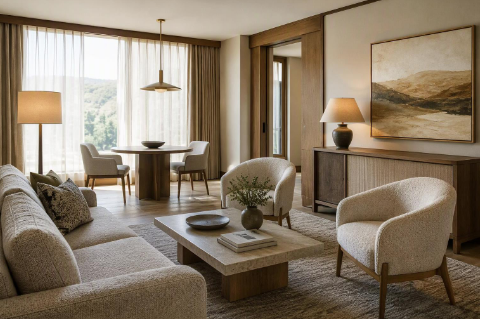
A standard guestroom is a bedroom with a desk. A suite or villa is a small apartment: living area, dining table, workspace, sometimes a kitchenette and an outdoor terrace. Guests pay a premium for that space, and they judge it with residential expectations — how the sofa feels, whether the dining chairs are comfortable, whether the terrace furniture looks inviting.
That creates a specific challenge for buyers: furniture that looks residential but survives commercial operation. Interior-led specifications often miss the second half.
Start with the zones the suite actually contains and how each will be used:
Living area — a proper sofa or pair of lounge chairs, coffee and side tables, and enough seating for the number of guests the suite sleeps.
Dining and work — a table that works for both breakfast and a laptop; check clearance around chairs and the route from the door.
Bedroom — the same principles as a good guestroom, but with space for storage, a dressing area and luggage.
Terrace or balcony — outdoor-rated pieces, not indoor furniture moved outside. Sun, rain, salt and pool chlorine destroy the wrong materials quickly.
Lighting and layering — suites usually need more light sources than standard rooms; make sure side tables and consoles can carry lamps and power.
Sightlines matter more in a suite. A guest sitting on the sofa should not stare at the bed; a desk should not block the window; the route from the entrance to the bathroom should stay clear with luggage in the room.
The differences are mostly invisible, which is why they are easy to miss when approving samples:
Upholstery — residential fabrics may look right but wear quickly under cleaning chemicals and daily use. Ask for contract-grade abrasion and cleaning data, or specify performance fabrics with a residential hand.
Frames and joinery — glued joints and thin rails that are fine in a home can loosen when furniture is moved by housekeeping. Check internal construction, not just the finish.
Outdoor pieces — powder-coated aluminium, weather-rated rope and quick-dry foam age far better than steel and standard foam.
Surfaces — coffee, wine and minibar spills are routine. Matte lacquers and untreated wood show rings; consider sealed tops or stone-look surfaces.
Flexibility — suites are often reconfigured or used for events. Loose, lightweight pieces are easier to move than heavy fixed furniture.
Decide which pieces are loose and which are fixed; loose furniture needs protective glides and a defined place to return to.
Plan power and data points before furniture layout, especially for desks and bedside tables.
Keep a spare set of premium fabric and a small parts kit — matching a discontinued fabric later is difficult.
Allow longer lead times for bespoke pieces and custom finishes, and approve a mock-up room where the budget allows.
Confirm delivery access: suite corridors, lifts and villa pathways often limit piece sizes more than the room itself does.
Premium rooms earn their rate through detail. A specification that balances residential comfort with commercial durability protects both the guest experience and the renovation cycle.




Copyright www.hzfgfurniture.com. All Rights Reserved. 浙ICP备2026006019号
