

-
Download
Certificate Query
Certificate Query

 2026/10/19 17:17:27
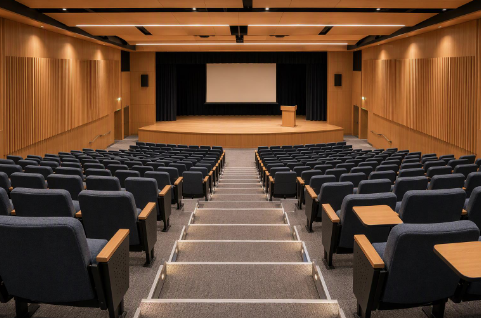
Most schools treat the assembly hall as a large empty room with chairs in it. In practice it is the hardest-working space on campus: whole-school assemblies, examinations, performances, parent meetings, visiting speakers and, in some schools, indoor sport. Furniture decisions made once will either support all of that or quietly get in the way for the next fifteen years.
Before comparing chair types, list how the hall is used in a typical month and how often the layout must change. That answer usually decides the seating system:
Fixed tiered seating suits halls used mainly for performances, lectures and assemblies. Sightlines are better, but the floor is lost for exams and sport.
Retractable or folding systems give tiered viewing when needed and a flat floor when not. They cost more and need maintenance, but they remove the daily chair-setting labour.
Loose stacking chairs are the most flexible and the cheapest to buy. They also consume storage, create handling noise and depend on enough staff time before every event.
A hybrid layout — a raked rear section plus a flat front floor — is often the practical compromise for schools that run both exams and performances.
Whichever system is chosen, confirm aisle widths, accessible wheelchair spaces, gangway lighting and the number of emergency exits before the layout is finalised. Exam use also means checking whether writing tablets are required and how they fold away.
A hall that looks finished can still be unusable if speech turns to mush. Acoustic performance comes from three separate measures, and schools usually need all three:
Absorb excessive sound with acoustic wall panels, ceiling treatment, carpet and upholstered seating. Interestingly, upholstered chairs absorb more sound than hard plastic seats at the same occupancy — an empty hall with hard chairs is the worst case.
Block noise from corridors, kitchens and plant rooms with well-fitted doors and partitions.
Shape the room by placing the stage, speakers and any AV screen so that direct sound reaches the back rows, and by breaking up large parallel hard surfaces that cause flutter echo.
Simple checks help: walk the back row while someone speaks at normal volume, and listen for the delay between direct sound and reflections. If a hearing-impaired loop or AV system is planned, involve the supplier early — acoustic treatment specified afterwards rarely fits the budget.
Assembly halls are also circulation routes and exam venues, so furniture takes knocks:
Specify stacking chairs with a stable, anti-tip design and stack trolleys matched to the chair.
Use ganging clips where rows must stay aligned, and check that clips release easily.
Ask for upholstery fire performance documentation that meets your local code.
Keep a small stock of replacement glides, caps and fixings; these are the parts that fail first.
Check lifting and handling: a chair that is comfortable for an adult to stack thirty times is not necessarily safe for student helpers.
A hall is expensive to change later. Getting the usage list, the acoustic plan and the storage allowance right at specification stage is worth more than any single furniture upgrade.




Copyright www.hzfgfurniture.com. All Rights Reserved. 浙ICP备2026006019号
