

-
Download
Certificate Query
Certificate Query

 2026/10/15 16:00:00
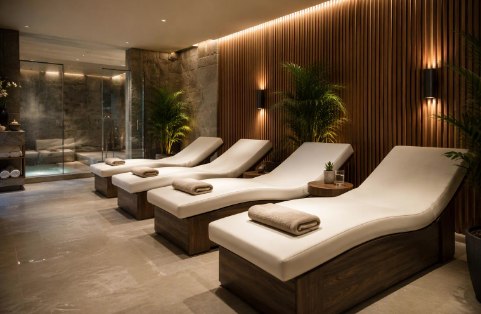
A spa reception may look calm, but the environment behind it is unforgiving. Steam, chlorinated water, massage oils, cleaning chemicals and damp towels attack finishes that survive perfectly well in a guestroom. Furniture that looks elegant in a brochure can delaminate, rust or discolour within a season if the materials are wrong.
Solid timber and marine-grade plywood outperform particle board in humid rooms; sealed edges are essential. Powder-coated aluminium and stainless steel resist corrosion far better than standard painted steel. For upholstery, choose solution-dyed or tightly woven synthetic fabrics that tolerate moisture and cleaning agents, and avoid untreated natural fibres in treatment and wet areas. Vinyl remains the practical choice where hygiene and wipe-down cleaning matter most.
Massage and treatment tables need stable frames, easy-clean surfaces and face-cradle comfort, with height adjustment that suits therapists of different sizes. Relaxation rooms are used in robes and bare feet: loungers should be comfortable for thirty minutes, easy to wipe, and set at a height that is simple to get up from. Provide side tables sized for a glass and a phone, and choose calm, low-glare finishes.
Gym furniture is less about chairs and more about benches, lockers, storage and reception. Benches must handle dropped weights and cleaning sprays; lockers should be ventilated and fitted with digital or keyed locks. Provide shelving or racking for towels and equipment, and check that flooring transitions and furniture feet will not damage the floor or trap moisture.
In wellness areas, the parts that fail are usually edges, fixings, glides and hinges — not the main structure. Specify corrosion-resistant fixings, sealed edges and replaceable glides, and confirm with your supplier which components can be reordered.
Share your spa, gym and relaxation layouts, and we will propose a specification built for humidity, hygiene and daily cleaning.




Copyright www.hzfgfurniture.com. All Rights Reserved. 浙ICP备2026006019号
