

-
Download
Certificate Query
Certificate Query

 2026/10/9 11:15:53
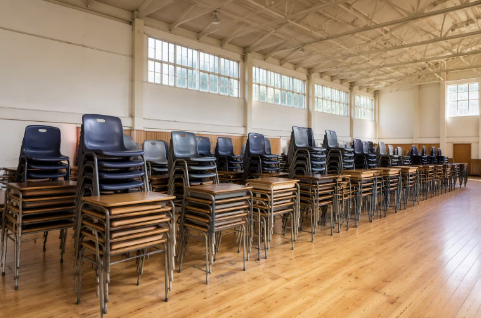
Education buyers are changing how they treat furniture that still has service life left. Instead of scrapping desks and chairs when a school closes, refurbishes or reconfigures, many authorities now redistribute them to other schools, public buildings or reuse schemes. That shift is already reshaping what suppliers are asked to deliver.
Budget pressure and waste-reduction goals are the main drivers. When a school refurbishes or a campus consolidates, usable desks, chairs and storage often no longer match the new layout, but they are still structurally sound. Rather than pay for disposal, many buyers look for a receiving school, a community building or a reuse partner. In practice this turns a single purchase into a chain of re-registrations, and it makes the receiving site, not only the original buyer, part of the specification conversation.
For suppliers, the brief is expanding. Buyers increasingly ask for frames and shells that survive two or three life cycles, standardised components that a second site can reorder, and finishes that tolerate repeated cleaning without fading or chalking. Documented material content matters too, because a receiving school usually has to re-register the goods in its own asset records and may need to confirm what the furniture is made of. Products designed purely for a first sale and a single fixed room are harder to place.
Treat reuse as a design input rather than an afterthought. Ask what happens to the furniture when the room changes hands, and price the answer into the specification.
Specify replaceable, standardised parts and note the reorder references on the paperwork.
Choose finishes and edge details that hold up to routine cleaning.
Keep a simple material record that a receiving school can reuse.
Ask for packaging and labelling that survive storage between sites.
What to watch: Watch whether reuse expectations start appearing in tender documents, because a requirement written into the brief changes how every bidder specifies durability and spare parts.




Copyright www.hzfgfurniture.com. All Rights Reserved. 浙ICP备2026006019号
