

-
Download
Certificate Query
Certificate Query

 2026/9/18 15:11:35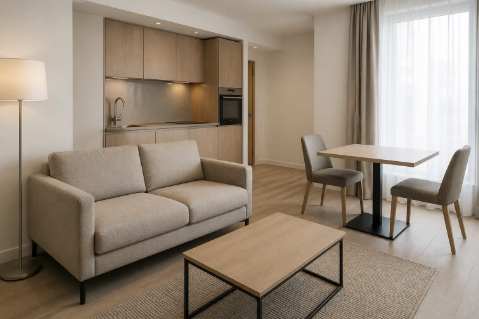
Operators and procurement managers furnishing serviced apartments or extended-stay units ask different questions, because guests stay for weeks rather than nights. The five below cover how this furniture differs from standard hotel pieces, which items survive long stays, kitchen and storage provision, the wear problems that emerge, and how procurement changes when units are let individually.
It is built for repeated domestic use rather than short visits. A guest who stays three weeks cooks, works, does laundry and moves furniture around, so pieces need higher abrasion and stain resistance, stronger joints, and surfaces that tolerate daily cleaning. Beds and seating accumulate far more hours of contact per year than in a transient hotel. Storage volume also rises, and movable pieces such as tables and chairs must survive being repositioned by guests.
Beds and mattresses take the heaviest load, so a contract-grade frame with a replaceable mattress and a cleanable base is the priority. Next come dining chairs and bar stools, where guests drag and tilt rather than lift, so glides and corner joints decide service life. Sofas need removable, washable covers. Coffee and side tables should have sealed edges and moisture-resistant tops because they double as dining and work surfaces day after day.
Treat the kitchen as a working space and the storage as part of the furniture package. Specify kitchen units with moisture-resistant carcasses, sealed edges and hardware rated for heavy door cycles, and check that dining seating matches the actual counter or table height. For storage, plan a wardrobe with hanging and drawer space, a luggage area, and concealed storage for linens, so cleaning staff can service the unit without moving furniture or improvising.
The failures are predictable: swelling along cut edges where water reaches a laminate, loose chair joints, sagging seat cushions, drawer runners that bind, and finish wear on armrests and table fronts. Fabric shows ring marks and food stains first. Cleaning itself causes damage when abrasive products dull laminate or leave residue on coated metal. Specify sealed edges, replaceable covers and non-abrasive cleaning instructions, and keep a stock of runners, glides and covers.
Unit-by-unit letting turns one large order into phased deliveries, so price the furniture as a repeatable per-unit kit with frozen specifications and a published reorder price. Order the first units complete, hold spare parts and a small buffer of every long-lead item, and confirm the factory can repeat the same finish and dimensions later. Mismatched replacement pieces between units are the visible problem guests notice first.
Bottom line: Extended-stay furniture works when every unit can be furnished, serviced and repaired to the same standard long after the first order is delivered.




Copyright www.hzfgfurniture.com. All Rights Reserved. 浙ICP备2026006019号
