

-
Download
Certificate Query
Certificate Query

 2026/11/5 16:30:53
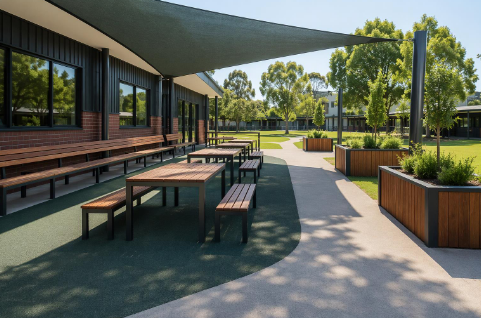
Schools increasingly use their grounds as teaching space: science observations, reading groups, art lessons and outdoor assemblies. The furniture brief is different from indoors — sun, rain, wind and grounds maintenance all shape what survives.
Done well, an outdoor classroom adds capacity for very little cost per square metre. Done badly, it becomes a store of warped tables and faded benches within two years.
Before choosing products, answer four questions.
Sun and wind. Where is shade at midday? Is the area exposed to prevailing wind? A shaded edge is often more useful than a large open space.
Ground surface. Grass, decking, paving and rubber surfacing each need different feet, fixings and drainage.
Access. Can a wheelchair reach the space in wet weather? Is the route firm and level?
Storage. Where will loose cushions, tablets and art materials live overnight?
Fixed benches along building edges for reading and quiet work; heavy enough not to move in wind.
Loose tables and benches for group work, with handles or a manageable weight so staff can rearrange them.
Wheelchair-accessible tables at the same height as adjacent benches.
Shade structures — sails, canopies or pergolas — coordinated with the furniture layout, not added later.
Planter benches that double as seating and define the space.
Outdoor storage for cushions, equipment and lesson materials; lockable and ventilated.
Powder-coated steel or aluminium frames with stainless fixings resist rust.
Timber must be suitable for outdoor use and finished for UV and moisture; softwoods fail quickly.
HPL or solid surface tops resist marking and cleaning better than thin laminates.
Drainage — seats and tables should shed water rather than pool it.
Rounded edges and non-slip surfaces reduce injury risk on playgrounds.
Replaceable feet and glides protect surfaces and extend life.
Keep sightlines open: furniture should not create hidden corners.
Leave clear routes for grounds maintenance and emergency access.
Avoid furniture that can be climbed where fall height is a concern.
Check fixings regularly; wind loosens what daily use does not.
Coordinate with playground equipment suppliers so zones do not conflict.
Confirm intended use: lessons, dining, play or assembly.
Agree fixing method: surface-mounted, weighted or movable.
Specify colour and finish against the school's exterior palette.
Ask for UV and weather performance data, not just product photos.
Confirm replacement parts for feet, slats and fixings.
Plan a maintenance routine with the grounds team.
An outdoor classroom is only as good as its worst winter. Choose for weather first, and the space will be used all year.




Copyright www.hzfgfurniture.com. All Rights Reserved. 浙ICP备2026006019号
