

-
Download
Certificate Query
Certificate Query

 2026/10/13 15:11:38
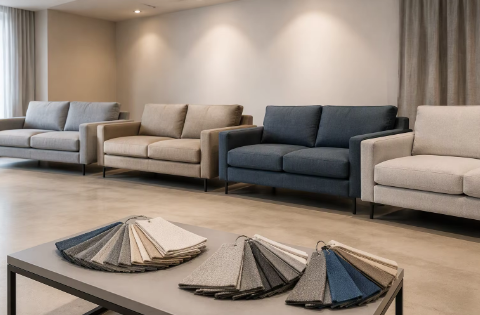
For most sofa retailers the binding constraint is not demand but floor space and the cash frozen in display units. That is why assortment planning has become a supplier-facing conversation. Retailers are narrowing the models they carry, asking for fewer but more configurable options, and expecting covers and modules to be swapped on the floor.
Retail buyers are under pressure to show range without filling the shop with stock that ages on the floor. The result is a smaller number of models, each offered in more configurations. A single frame may be shown with different covers, leg options or module counts, letting one display position do the work of several. Swatches and quick cover changes support the same idea, and slow sellers are dropped sooner than they once were.
A range built around shared frames and variable covers is easier to sell than many distinct models, because it lets a retailer change the look without changing the platform. That places a premium on modularity: consistent frame geometry, interchangeable covers, and modules that combine predictably. The ability to supply display units and swatch sets alongside the order becomes part of the proposition, not an afterthought, since retailers plan the floor before they plan the reorder.
Buyers should map the floor by function rather than by model count, and ask which configurations a supplier can support from the same frame. Suppliers should document what is interchangeable and offer realistic swatch and display support.
Group models by shared frame and component platform.
Confirm cover and module interchangeability before committing.
Request display units and swatch sets with the first order.
Agree how discontinued covers will be replaced.
What to watch: Whether retailers start treating covers, legs and modules as a stocked service rather than a one-off choice, and whether suppliers can support cover changes years after the original order.




Copyright www.hzfgfurniture.com. All Rights Reserved. 浙ICP备2026006019号
