

-
Download
Certificate Query
Certificate Query

 2026/9/21 14:57:00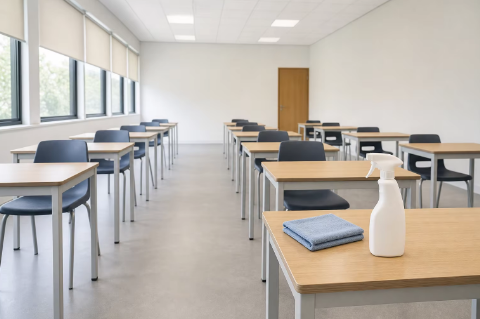
School facilities teams and buyers often ask how much cleaning school furniture really needs, and what is safe to put on a classroom desk. These five questions cover daily wiping, suitable products, stubborn marks, common staff mistakes and the spare parts worth keeping.
Daily wiping is not necessary. Most classrooms need a full clean once a week, plus a quick wipe of tops and chair backs after messy lessons. High-touch points like desk edges and armrests should be wiped every day during flu season. Deep cleaning of frames and under-seat areas fits into each term break.
Warm water with a mild neutral soap is enough for most surfaces, including laminate tops and powder-coated frames. Avoid bleach, ammonia, harsh solvents and abrasive pads, which dull finishes and strip edge trim. Rinse with a damp cloth and dry immediately so water does not sit in seams or around screw holes.
Blot fresh ink instead of rubbing it, and use a little rubbing alcohol on a cloth for ballpoint marks. Scrape dried glue with a plastic scraper, never a blade. Light scratches on laminate can be hidden with a matching wax stick; deep gouges should be reported for repair.
Stop dragging desks and chairs across the floor, which damages glides and loosens joints. Do not spray cleaner directly onto surfaces or electronics and sockets; spray the cloth instead. Do not stand on chairs or use them as ladders, and do not stack chairs higher than the maker's limit.
Keep floor glides, feet caps, seat shell screws, edge trim and hinge pins on site, because these are the parts that wear out first. Small parts cost little but prevent a chair being taken out of service. Ask for an exploded parts list with item numbers so replacements match the original.
Bottom line: Simple weekly cleaning, the right products and a small box of spares keep school furniture in service for years.




Copyright www.hzfgfurniture.com. All Rights Reserved. 浙ICP备2026006019号
