

-
Download
Certificate Query
Certificate Query

 2026/9/17 17:18:07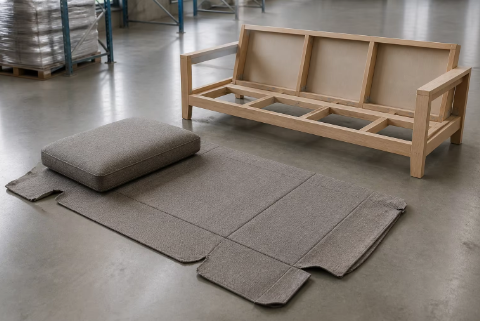
Retail buyers carry the customer relationship long after the container is unloaded, so warranty wording matters as much as the landed price. These five questions cover what sofa warranties actually cover, the exclusions that cause most disputes, cross-border claims, replacement covers after a range change, and the records a buyer must keep.
A typical export sofa warranty covers frame and structural failure, suspension and mechanism defects, and foam that collapses well beyond normal settling, while the cover is usually treated separately from the frame. Durations vary by component rather than by product: frames are often covered for longer than cushions, and moving parts such as recliner or sleeper actions sit on the shortest term because they wear fastest. Ask for cover periods in the destination market's terms.
Normal wear, misuse and anything the end customer does after delivery are the standard exclusions: fading from direct sunlight, soiling and cleaning damage, cuts, burns and pet damage, and cushion softening inside an agreed tolerance. Also commonly excluded are damage from using the wrong cleaning agent, overloading a mechanism beyond its stated rating, and transit damage where the buyer arranged carriage. Ask where exactly the line sits for compression.
The practical route runs through the buyer, not the end customer: the retailer documents the fault, the importer raises it with the supplier, and the supplier approves a remedy. Remedies are usually parts rather than whole sofas, such as a replacement cushion, cover, mechanism or leg set shipped with the next order. Inspect faults on arrival and photograph them before assembly, and agree in advance who pays for parts, freight and local labor.
Only if it is agreed before the original order is placed. Spare covers and cushions depend on the fabric still being available at the mill and the cover pattern still being on file, and mills do discontinue colors. Buyers should secure a spare-parts commitment for a defined period and confirm the fabric article number will be held. A small quantity of spare covers ordered with the original container is the cheapest insurance available.
Keep the purchase order, the approved specification and sample reference, the inspection report, and dated photographs of the fault in one file. Photographs should show the whole item as well as the fault close up, with the delivery date traceable. Record the batch or production reference printed on the carton, the fabric article and lot, and the customer's description of use. Claims raised months later without that file are hard to resolve.
Bottom line: Warranty value rests less on the wording than on component-level terms, a written spare-parts window and a claim file the buyer can complete.




Copyright www.hzfgfurniture.com. All Rights Reserved. 浙ICP备2026006019号
