

-
Download
Certificate Query
Certificate Query

 2026/9/17 17:05:24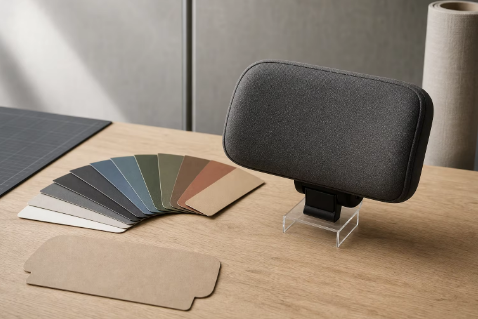
Dealers selling into corporate fit-outs are asked for branding, non-standard sizes and colour matches more often than for unusual products. The five questions below cover what can realistically be customised on an office furniture range, whether branding raises the minimum order, when a custom size needs new tooling, how colour samples are approved, and how long a custom programme takes.
Most ranges allow a workable set of changes without rebuilding the product: finish and fabric selection from a swatch library, custom paint or powder-coat colours, branded fabric or embossed logos, dimension changes within a stated band, left or right-handed configurations, socket and cable-management layouts, and packaging artwork. Structural change is a different matter — altering a frame, mechanism or load rating means engineering work and usually a new tooling or testing cycle.
Usually yes, though not for the reason buyers expect. Branding itself is cheap once set up: the real cost is running a dedicated batch of fabric, powder coat or print, which only makes sense above a minimum quantity. Typical thresholds move with the process — fabric and powder coating need larger runs than logo embroidery or printed packaging. Ask what the minimum is per finish rather than for the order as a whole.
A size change needs new tooling when it alters the geometry that existing tooling produces. Shortening a desk top within a standard frame, or changing a panel width inside an established system, is usually a cutting-programme change and nothing more. New tooling appears when a profile, curve, casting or moulded part changes shape, when a mechanism needs a different fixing pattern, or when a new load rating must be re-tested.
Colour is approved on a physical sample, never on a screen. Supply the reference — a Pantone code, a fabric swatch or a previously supplied part — and expect the factory to match to that reference under agreed lighting. Approve the result on the actual material, because the same colour behaves differently on powder coat, laminate and fabric. Sign and date the approved sample, keep a sealed copy, and state the acceptable tolerance so later batches are judged against it.
Add roughly two to four weeks to a standard schedule. Colour matching and sample approval usually account for one to two weeks, branding artwork setup for a few days, and any tooling or re-testing for the remainder. The variable that catches buyers out is the approval loop: every round of sample revisions resets the clock. Confirm the number of revision rounds included in the quotation, and set a firm date for sign-off before production is scheduled.
Bottom line: Customisation is mostly a scheduling and approval exercise rather than a manufacturing one, and the buyer who controls sign-off controls the delivery date.




Copyright www.hzfgfurniture.com. All Rights Reserved. 浙ICP备2026006019号
