

-
Download
Certificate Query
Certificate Query

 2026/9/17 16:56:32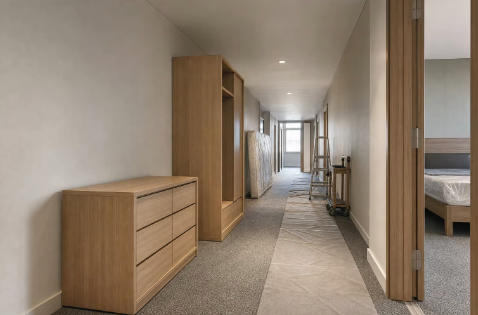
Hotel FF&E procurement firms and hospitality contractors ask these five questions whenever an opening date is already published and the furniture programme still has to fit inside it. The answers cover a realistic lead time for a full guest room floor, what most often delays a hospitality order, whether a mock-up room adds time, how to phase an order around a staged refurbishment, and how much buffer an opening date actually needs.
Treat it as a sequence rather than one number. Drawing and finish approval, sampling, production, finishing, packing and ocean transit each take their own time, and a full floor runs to several months from approved drawings to installed rooms. Casegoods with matched finishes sit at the long end; standard upholstery is shorter. Ask for the schedule broken into these stages so you can see where the weeks actually sit.
Late approvals, not slow factories. Drawings that sit unsigned, finish samples that travel backward and forward, and specification changes after production starts account for most delay. Second on the list is site readiness: furniture arriving before rooms are carpeted and painted has to be stored, and re-handling causes damage and snagging. Availability on a nominated fabric or a specific hardware item closes the list.
Yes, but it usually saves more than it costs. A mock-up room adds sampling, one room produced out of sequence, shipping and a review period during which the design may change. In exchange, it exposes finish clashes, proportions and installation problems before the full run begins. The rule that keeps the schedule intact is to sign the mock-up off in one round with a written punch list, not to keep refining it while production waits.
Phase by area and by finish, not only by delivery date. Group everything that must match — all casegoods in one wing, all public area joinery — into as few production batches as the schedule allows, then release deliveries to suit the refurbishment sequence. Reserving finished material from an early batch for later floors keeps colour consistent. Agree how long the factory will store completed furniture and who carries the cost.
Build the buffer where the most uncertainty sits. Ocean freight and customs are the usual variables, so add time before the vessel booking rather than after; a late file at the port costs more than a late carton at the factory. Approval stages depend on the buyer, so those are controllable. Most programmes hold a contingency measured in weeks rather than days, and it should be visible in the schedule.
Bottom line: Lead time is decided by approvals, sampling and phasing as much as by production speed, so schedule the chain from drawing to installation.




Copyright www.hzfgfurniture.com. All Rights Reserved. 浙ICP备2026006019号
