

-
Download
Certificate Query
Certificate Query
 2026/9/16 15:01:36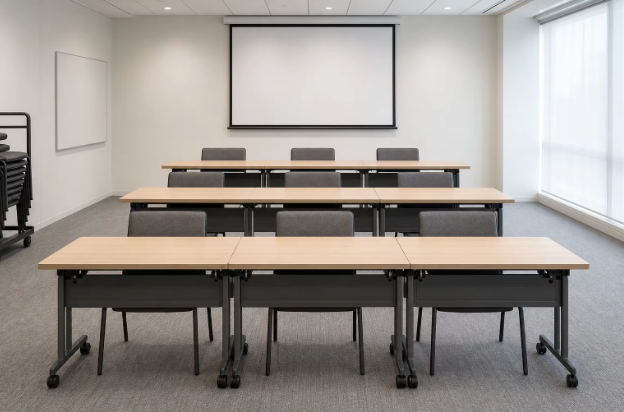
A training room is rarely used the same way twice. A morning may need rows facing a screen, an afternoon discussion groups, and the following day a boardroom-style block. Nesting and folding tables exist so the room can be rearranged by the staff who are already there, without specialist labour.
Nesting tables flip the top vertically and roll the frame into a tight line; folding tables hinge at the centre or the legs and store flat. Both trade rigidity for mobility, so the question is how the top locks open and whether the mechanism is rated for the cycles a weekly reset implies. A light mechanism suits occasional use but becomes a problem in a room reset daily.
Layout flexibility is mostly a question of footprint. A table with a narrow depth and full-length nesting keeps aisles clear when stored; a deep table suits group work but takes more floor area when the room is cleared. Before ordering, sketch the two or three most common layouts and check aisle widths for the room's normal occupancy.
Writing surfaces and power need the same forward planning. The top must accept pen and repeated cleaning, and cable access should be planned, not retrofitted:
Grommets or flip-up sockets sized for the cables the site actually uses
Sockets specified for the local power configuration
Cable trays or ties so cords can be cleared within one reset
Spare capacity for the next projection or conferencing setup
Confirm socket ratings and plug types before production. A mismatched outlet makes the whole order unusable on arrival.
Handling decides whether the room can be reset by one person or needs two. Stacking chairs and table trolleys work as a system: chairs need to stack square and stable to a usable height, and trolleys need casters that roll on the room's actual floor, including carpet barriers and thresholds.
Specify for the function the room performs most often, then layer flexibility on top. Note the maximum stacking height the store allows, the door widths the trolleys must pass and the labour available for reset. Where a room changes use weekly, a mobility-first specification usually outlasts a heavier one.
Choose nesting or folding tables by how often the room is reset, not by price alone.
Plan layouts and aisle widths before fixing table depth and shape.
Verify socket rating and plug type for the destination power configuration.
Check stacking height, door widths and trolley casters against the actual store.




Copyright www.hzfgfurniture.com. All Rights Reserved. 浙ICP备2026006019号
