

-
Download
Certificate Query
Certificate Query
 2026/9/11 17:06:45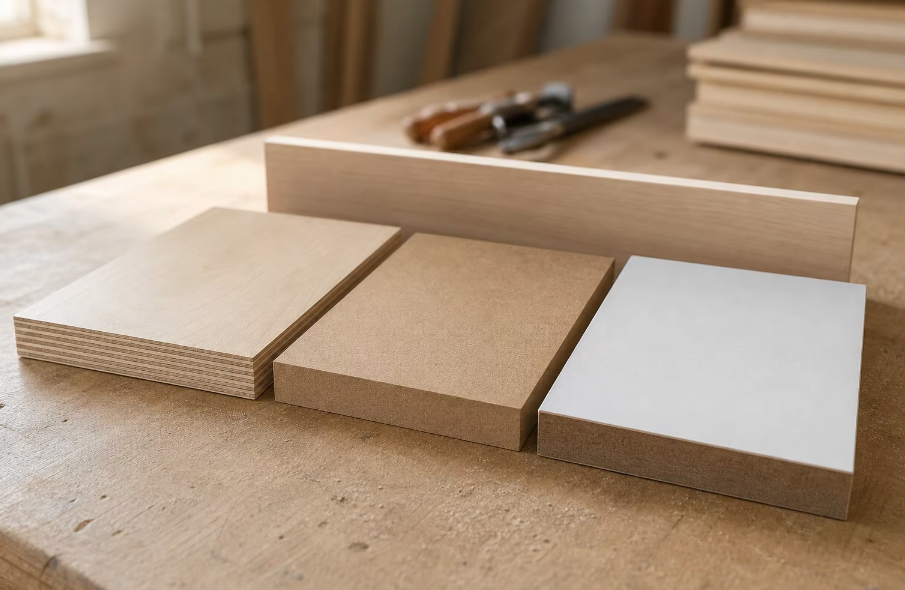
The first confusion in classroom desk specifications is treating plywood, MDF and HPL as three alternatives on the same list. They are not quite comparable: plywood and MDF are core materials, while high-pressure laminate is a surface layer bonded onto a core.
That means an HPL desk top is really a combination, and the core underneath still matters. Common builds in the school furniture trade are a plywood core with a laminate face, an MDF core with a melamine or laminate face, and a plywood core finished with clear lacquer where a natural timber look is wanted. When comparing quotations, establish the core first, then the surface.
Moisture behaviour separates the materials more sharply than any other factor. Plywood, built from cross-laminated veneers, tolerates humidity and short-term damp far better than MDF, which swells when water reaches an unprotected edge. HPL protects whatever it covers, but only up to the edge of the sheet — the exposed edge is still the vulnerable point on any panel.
Edge banding quality is therefore as important as the core. A thicker band with a properly sealed adhesive resists knocks and moisture far better than a thin one, and an unsealed edge on an MDF core is the single most common cause of premature failure in service.
Writing and cleaning behaviour follow the surface:
Laminate faces are hard, easy to wipe and resist ink and general classroom grime.
Melamine is serviceable and lower cost, but scratches are harder to hide.
Natural lacquered surfaces look warm but show wear and need gentler cleaning.
Aggressive chlorine-based cleaners attack some coated surfaces over time, so confirm the cleaning regime the school uses.
Plywood sits at the higher end and suits humid or coastal markets, heavy institutional use and buyers who value a longer service life. MDF is the lowest-cost route and works well in dry, temperature-controlled indoor environments and high-volume tender projects. HPL sits at the top of the price ladder and suits surfaces that take constant writing and daily cleaning, such as primary classrooms, art and design spaces.
Define the core first, then the surface — HPL is a face, not a core.
Plywood tolerates moisture; MDF needs fully sealed edges to survive.
Edge banding thickness and adhesive quality drive service life.
Match the build to the destination climate and the school's cleaning routine.




Copyright www.hzfgfurniture.com. All Rights Reserved. 浙ICP备2026006019号
