

-
Download
Certificate Query
Certificate Query

 2026/9/11 17:02:58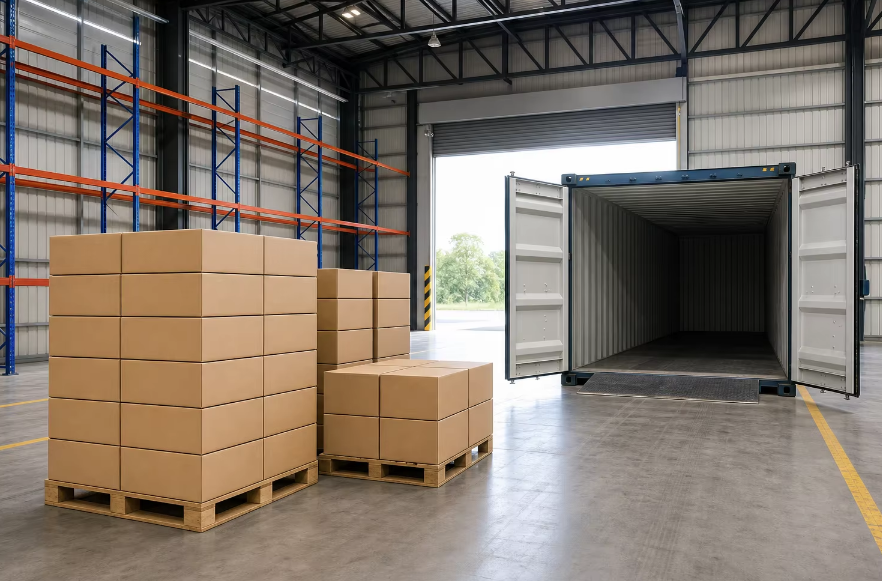
Chairs usually nest or stack, while desks often do not, and that difference decides how much of a container a mixed order will actually occupy. Ask for the nesting pitch — the extra depth each additional chair adds once chairs are pushed together — rather than an average figure per chair. The same applies to stackable desks: the height of a stack of five is rarely five times the height of one.
Plan on loaded volume, not catalogue volume. A container calculated on flat product dimensions will run out of usable space once cartons, pallets and dunnage are counted.
Mixing models in one container is normal for school projects and saves freight, but it needs a clear loading plan. Keep cartons grouped by model and by destination so that a receiving warehouse can identify each group without unpacking the whole load.
State the nesting pitch for each chair model and the safe stack height for each desk model.
Record cartons per pallet, pallet footprint and total pallet count.
Place the heaviest pallets over the container's axle line, with lighter cartons toward the doors.
Decide between pallets and loose loading: pallets cost cubic volume but speed up unloading, while loose loading gains space but requires more labour and manual handling at destination.
Moisture protection deserves attention on any sea freight of furniture with steel frames and wood-based panels. Use container desiccant, avoid loading damp pallets, and line the container where humidity is expected to swing during transit.
Confirm what equipment the receiving site actually has. A dock with a forklift can take palletised loads quickly; a school site with only a tail-lift or a kerbside delivery cannot. If the destination has no dock, loose-loaded cartons will each be handled by hand, which changes both the cost and the time on site.
Arrange the load so it unloads in reverse order of loading, with the items needed first sitting closest to the doors. Send the loading plan ahead of the shipment so the receiving team can prepare space.
Calculate container capacity from loaded volume, including cartons and dunnage.
Get the nesting pitch for chairs and the safe stack height for desks from the supplier.
Balance weight over the axle line and keep model groups identifiable.
Match the loading method to the equipment available at the destination.




Copyright www.hzfgfurniture.com. All Rights Reserved. 浙ICP备2026006019号
