

-
Download
Certificate Query
Certificate Query

 2026/9/11 15:12:36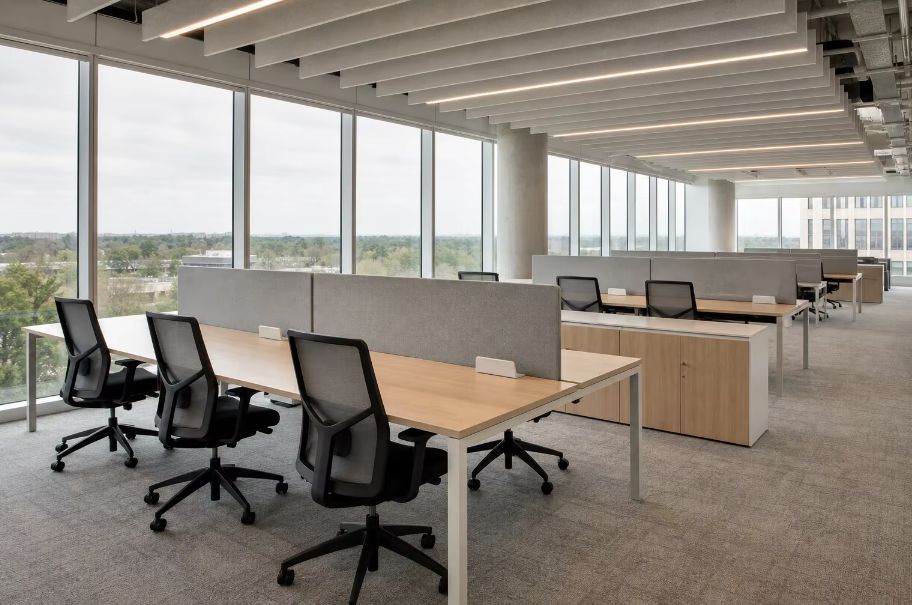
A quotation only means something once the range is fixed. Office furniture is a group of families with different tooling, materials and compliance profiles, and a supplier strong in task seating may be a reseller in storage. Define the families you intend to sell first:
Task and operator seating — highest volume, most aggressively compared.
Executive and conference seating — more fabric and foam, lower volume, more customization.
Workstations and benching — screens, beams, cable trays and shared legs.
Desks — fixed, executive and height-adjustable.
Storage — pedestals, lockers, filing cabinets and credenzas.
Conference tables — modular and fixed, specified late in projects.
Soft seating — lounge, collaborative and reception pieces.
| Product family | First question from buyers | Specs that drive cost |
|---|---|---|
| Task seating | Weight rating and warranty? | Gas lift class, mechanism, foam density, base |
| Benching | Can it be reconfigured later? | Beam and rail system, screens, cable management |
| Desks | Fixed or height-adjustable? | Frame type, motor and controller, top substrate |
| Storage | Load per shelf, and which lock? | Steel gauge, powder coating, panel substrate |
| Conference tables | Cable access and modularity? | Top construction, base design, edge profile |
Both models are legitimate. What matters is knowing which one you are buying from, because it changes price structure, customization depth and how fast problems get solved.
| Signal | Factory-direct | Trading company |
|---|---|---|
| Product range | Narrow and deep | Broad, assembled from several sources |
| Customization | Tooling, foam, fabric and dimension changes | Usually finishes and fabric swaps |
| Technical answers | Process detail and test reports from their own QC | Refers back to the factory behind the product |
| Price structure | Tooling and MOQ visible in the quote | Margin embedded, less transparency |
| Capacity talk | In-house welding, molding, upholstery, coating | Warehousing and consolidation focus |
The clearest test is technical: ask how a chair base is welded, or how a desk top's substrate and edge banding are specified, and listen for a process description rather than a forwarded message.
Gas lift class — the cylinder grade. Higher classes cover heavier load ratings, and the cylinder is among the first parts downgraded in cheap builds.
Base type — molded nylon, aluminum or steel; it affects stability, weight rating and price more than shell styling.
Caster type — hard casters for carpet, soft or dual-wheel casters for hard floors. The wrong type generates returns.
Foam density — in kg/m3 or lb/ft3. Low-density foam causes most early seat-collapse complaints.
Mesh versus upholstery — mesh is breathable and easier to clean; upholstery offers more support options and design flexibility.
Laminate, melamine or veneer — laminate and melamine are resin-based surfaces over a substrate; veneer is real wood. Laminate resists wear better in high-traffic use; veneer carries the premium finish.
Edge banding — PVC, ABS or melamine tape, flat or zero-joint laser applied; banding failure usually reveals a low-cost build first.
Powder coating — measured in microns with a thickness gauge; thin coating chips at edges and corrodes early.




Copyright www.hzfgfurniture.com. All Rights Reserved. 浙ICP备2026006019号
