

-
Download
Certificate Query
Certificate Query

 2026/9/4 17:10:13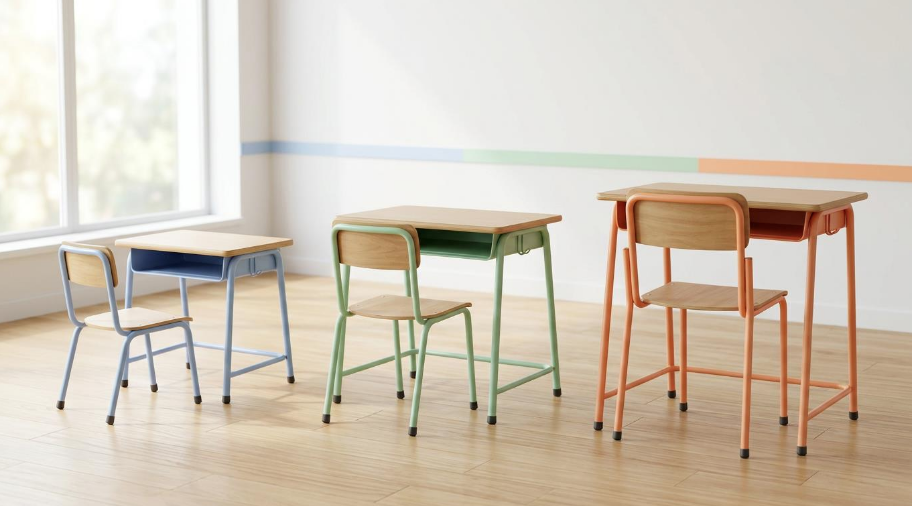
One of the most common mistakes in classroom furniture buying is ordering a single "school size" for an entire building. Students range from small children to full-grown young adults, and furniture that fits one group can be actively uncomfortable — even unsafe — for another.
Correct sizing is simple in principle: a student's chair height should allow their feet to rest flat on the floor with knees bent at a comfortable angle, and the desk height should let their forearms rest naturally while writing. Getting there requires choosing products designed for the right age band.
While exact dimensions vary by manufacturer and local standards, furniture is generally grouped to match developmental stages:
Early childhood (kindergarten and pre-school). Low chairs and tables sized for small children, with generous support and easy entry. Stability and rounded edges matter most at this age.
Primary school (grades 1–6). A wide range of body sizes calls for size-graded furniture, often in two or three height steps within a school. Look for chairs and desks that can be matched to individual students.
Secondary school (grades 7–12). Students reach near-adult heights, so many schools select from the largest size bands — and increasingly choose adjustable furniture to cover the full range as cohorts change.
Mixed-age and specialist rooms. Libraries, labs and art rooms may serve many age groups; adjustable or multi-height solutions help one room serve many students.
The most important rule: specify furniture by student height ranges, not by grade label alone, because growth patterns vary widely between regions and cohorts.
Furniture is only as good as its fit:
Seat height is the starting point — it sets foot support, which drives posture.
Desk-to-chair relationship. The desk top should sit roughly at elbow height when the student sits upright, leaving room for thighs and knees underneath.
Consider the tasks. Writing, computer use and art need slightly different surface heights; height-adjustable options let one desk serve all of them.
Legroom for all. Taller students need deeper legroom; check under-desk clearance rather than only top height.
Measure your students. For existing schools, measure the height range of each year group before specifying furniture.
Order size ranges, not single sizes. Most classrooms need a mix, especially where grades share spaces.
Allow room to grow. For multi-year use, choose furniture that fits the largest students in the group at the end of their time in the room.
Check standards. Many markets have school furniture dimension guidelines or standards — confirm your chosen sizes align with them.
Test before committing. Have students from the actual age group sit in samples; their feedback is the fastest way to validate sizing.
Correctly sized furniture is one of the cheapest improvements you can make to student comfort, health and attention. If you are planning a furniture purchase, contact us for size charts, samples and guidance tailored to your project's age groups.




Copyright www.hzfgfurniture.com. All Rights Reserved. 浙ICP备2026006019号
