

-
Download
Certificate Query
Certificate Query

 2026/9/4 16:51:20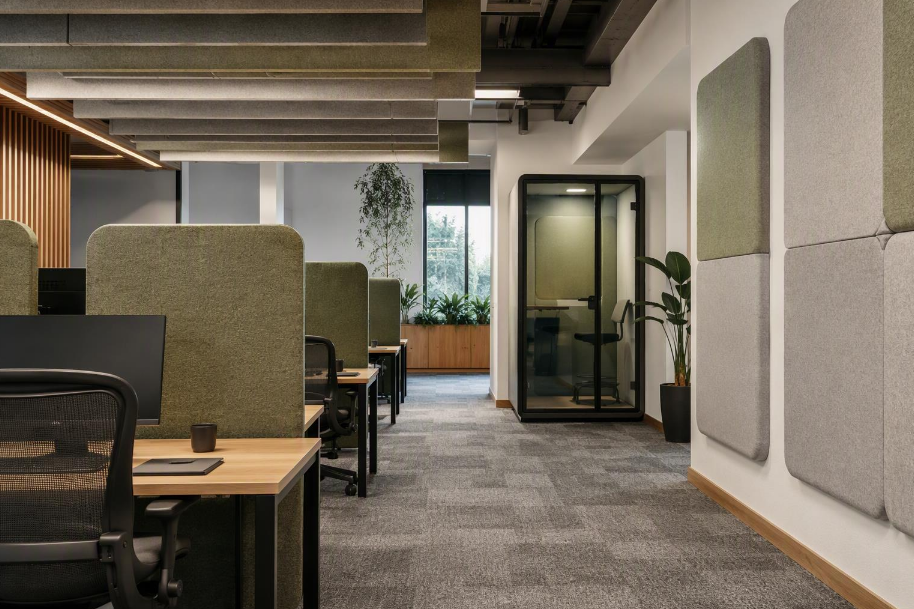
Before choosing acoustic furniture, it helps to understand what you are solving:
Sound absorption removes energy from sound waves — soft, porous materials like acoustic felt, foam and heavy textiles soak up reflections that would otherwise bounce around the room.
Sound blocking stops sound from passing between spaces — mass and airtight construction in walls and pods physically separate quiet from noisy zones.
Sound masking adds a gentle, controlled background noise that makes intermittent distractions less noticeable.
An open-plan office usually needs all three, and furniture contributes most to absorption and blocking.
Acoustic panels and screens. Freestanding and desk-mounted screens with sound-absorbent cores reduce the direct noise between neighboring workstations. Many modern versions use recycled PET felt, which absorbs sound effectively while supporting sustainability goals.
Acoustic pods and phone booths. Self-contained units with insulated walls give employees a genuinely quiet place for calls, video meetings and deep work — without the cost and permanence of building rooms.
Upholstered and soft elements. Sofas, upholstered chairs and cushions absorb sound far better than hard surfaces. A lounge area with soft seating both invites conversation and soaks up its noise.
Soft flooring and furnishings. Rugs, carpet tiles and fabric wall panels stop sound from bouncing off hard floors and walls, reducing the "echo chamber" effect common in minimalist offices.
Zoned layouts. Positioning quiet areas away from circulation routes, tea points and collaboration hubs reduces noise at the source, before furniture even gets involved.
Effective acoustic design starts at the layout stage:
Map the noise map. Identify the loud zones (kitchens, collaboration areas, phone users) and place quiet zones — focus areas, reading rooms — as far from them as the floor plan allows.
Choose absorption ratings deliberately. Suppliers specify sound-absorption performance for acoustic products; select absorption levels matched to each area's needs, with higher performance in the spaces that must be quietest.
Balance openness with refuge. The best workplaces offer both — open, energetic collaboration zones AND protected, bookable quiet spaces, so no employee is forced into the wrong environment.
Combine surfaces. Acoustics improve most when ceiling, wall, floor and furniture treatments work together rather than any single product doing all the work.
Quiet is not the opposite of collaboration — it is the condition that makes collaboration sustainable. Our acoustic furniture range — panels, screens, pods and soft seating — helps you build an office where both focus and teamwork thrive. Contact us for a workspace consultation.




Copyright www.hzfgfurniture.com. All Rights Reserved. 浙ICP备2026006019号
