

-
Download
Certificate Query
Certificate Query
 2026/9/4 16:49:30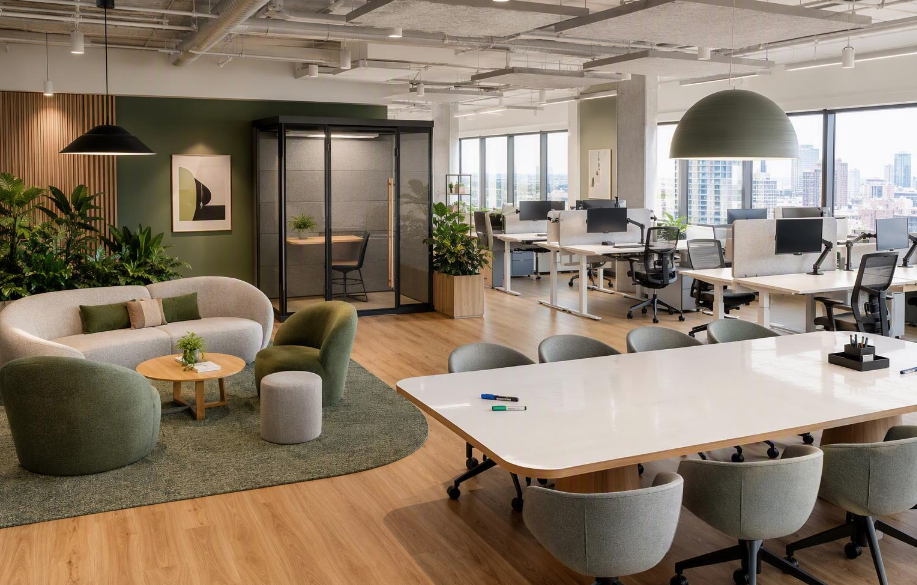
The office has changed jobs. Before the pandemic it was the default place to work; today it is a destination people choose — for the meetings that are better in person, the collaboration that sparks in hallways, and the sense of team that video calls cannot quite recreate. This new role demands a new kind of workplace: one designed around activities rather than rows of identical desks.
Activity-based working (ABW) is the design philosophy behind this transformation. Instead of assigning every employee a fixed workstation for every task, ABW creates a range of settings matched to the way people actually work — and fills them with furniture that supports each activity properly.
A hybrid team does many kinds of work in a week, and each needs a different environment:
Deep individual focus — quiet zones, focus booths and acoustically protected spaces for heads-down work.
Collaboration — team tables, project rooms and open meeting areas where groups can gather around shared surfaces.
Connection and socializing — lounge seating, café areas and break zones that rebuild the informal bonds remote work eroded.
Flexible individual work — agile desks, sit-stand workstations and touchdown points for employees who come in part of the week.
The most successful hybrid offices treat square meters as a portfolio of settings, sized to how teams actually use the space — often meaning more collaboration space and less permanently assigned desk space than the pre-hybrid office.
Furniture makes or breaks an activity-based layout. Key pieces shaping modern offices:
Acoustic pods and focus booths. Self-contained, sound-isolated units give employees private space for calls and concentration without walls — the fastest-growing category in workplace furniture.
Lounge and soft seating. Deep sofas, curved banquettes and flexible lounge groups create the relaxed, conversation-friendly settings where informal collaboration happens.
Agile and sit-stand desks. Height-adjustable workstations support posture and energy, while easily reconfigurable desks let neighborhoods evolve as teams change.
Team tables and writable surfaces. Large shared tables and marker-friendly surfaces make meeting and project spaces genuinely collaborative.
Integrated technology. Power and data built into tables, sofas and pods remove the biggest practical barrier to working anywhere in the office.
Furniture alone does not create a great office — it must be paired with smart policy, technology and culture. But durable, flexible furniture makes the physical transformation affordable and achievable:
Plan for change. Modular, mobile furniture lets you adjust layouts as usage data comes in, instead of committing to a rigid design.
Invest where it counts. Put the highest quality and most distinctive furniture in the spaces that define the culture — lobbies, collaboration hubs and social areas.
Think contract-grade. Shared furniture is used intensively by many people; commercial construction and performance fabrics protect your investment.
The office of the hybrid era is smaller, smarter and more human — a place that offers what remote work cannot. We design and manufacture office furniture for activity-based workplaces worldwide, from sit-stand systems to acoustic pods and lounge collections. Contact us to plan your workspace.


Copyright www.hzfgfurniture.com. All Rights Reserved. 浙ICP备2026006019号
