

-
Download
Certificate Query
Certificate Query

 2026/9/4 16:23:44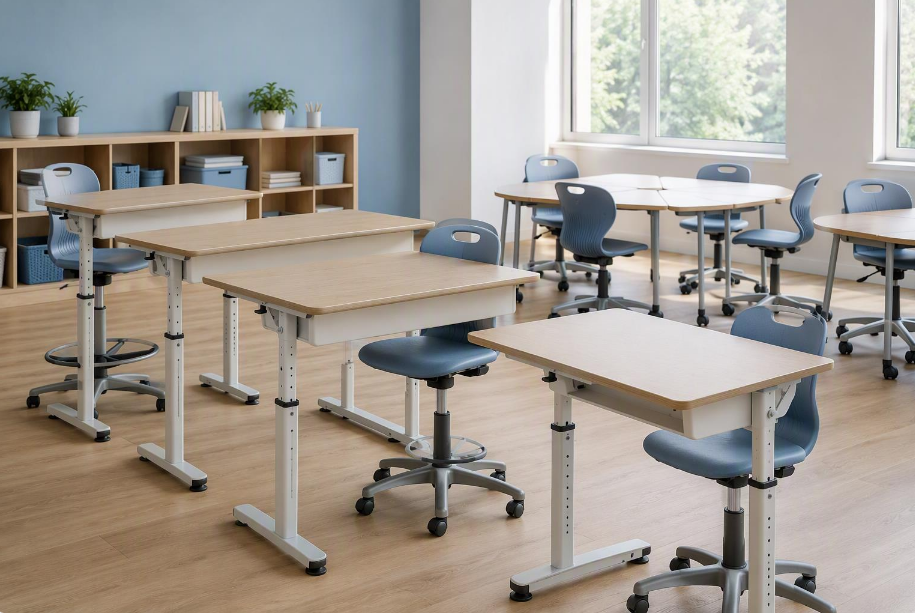
Research into classroom comfort consistently links poorly sized furniture to poor posture, discomfort and reduced concentration. When students sit in chairs that are too high or at desks that force them to lean, their bodies compensate — and their minds follow.
Students also spend more time than ever on laptops and tablets, which changes how they sit. Screens at the wrong height pull heads forward and put strain on young necks and shoulders. Adjustable furniture gives every student a neutral, supported working position: feet flat on the floor, knees at a comfortable angle, and eyes level with the top of the screen.
There is a wellbeing benefit too. Students who are physically comfortable are less distracted and more engaged — which is exactly what teachers and parents want from every classroom.
Not all "ergonomic" furniture is created equal. When evaluating school desks and chairs, look for features that genuinely support growing bodies:
Seat-height adjustment. A chair that adjusts to the student — rather than the student adjusting to the chair — is the foundation of classroom ergonomics.
Backrest and depth support. Chairs with adjustable backrests and properly sized seat depth support the lower back during long lessons.
Height-adjustable desks. Height-adjustable and even sit-stand desks allow the work surface to match each student's size, and let students change posture through the day.
Thoughtful edges and materials. Waterfall or rounded front edges reduce pressure behind the knees; stable, non-tip bases keep active students safe.
Simple, safe adjustment mechanisms. In busy classrooms, adjustments need to be quick, tool-free where possible and impossible to get wrong.
Good ergonomics should not stop at the classroom door. Consider the full picture when planning furniture:
Teacher stations. Educators spend their days on their feet or hunched over laptops — sit-stand teacher desks and supportive task chairs protect the adults too.
Different spaces, different needs. Science lab stools, art room tables and library lounge seating each place different demands on the body.
Sizing across age groups. Kindergarten chairs and high-school chairs are not the same product scaled down — depth, height range and support all change with age.
Sightlines. Adjustable furniture also helps teachers see the room and reach every student, which improves classroom management.
When furniture grows with students, schools avoid the expense and disruption of replacing whole classrooms every few years as cohorts change.
Sourcing ergonomic school furniture from a specialist manufacturer means you can specify height ranges, colors and finishes to match your project — with samples tested by real students before you commit. Contact our team to discuss adjustable desk and chair programs for your school or market.




Copyright www.hzfgfurniture.com. All Rights Reserved. 浙ICP备2026006019号
