

-
Download
Certificate Query
Certificate Query

 2026/10/10 15:45:15
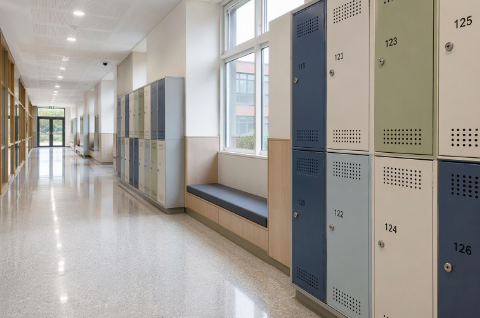
Lockers are bought once and opened thousands of times. They are also the item most often specified in a hurry at the end of a project, when the budget has already been spent on classrooms. Getting them right is less about the brand and more about a handful of practical decisions.
Count how many students actually need a locker — a full cohort, or only those without a home room? Decide where they belong: outside classrooms, in corridors, in changing areas or at the entrance. Corridor runs are convenient but need clear walking width; changing rooms need ventilation and easy cleaning. Check whether locks will be keyed, combination or digital, and how lost keys or forgotten codes will be handled, because this determines ongoing administration.
Powder-coated steel is the standard for a reason: strong, repairable and easy to clean. Check the gauge of the steel and how the door, hinges and lock are assembled — these are the failure points. In wet or outdoor-adjacent areas, choose galvanised or moisture-resistant construction and consider sloped tops that prevent items being stored on top. For younger students, laminate or wood-effect units with rounded edges and lighter doors work better than full-size steel lockers.
Wall-fixed banks need solid backing and correct spacing for the door swing; freestanding banks need levelling feet or plinths. Leave enough gap for doors to open fully in a busy corridor, and consider bench seating between banks for bags and shoes. Plan numbering and labels before delivery so students are assigned spaces on day one.
Ask how damaged doors, locks and hinges are replaced, and whether individual parts can be ordered years later. Keep a small stock of spare locks and hinges. Choose a finish that hides scuffs and allows graffiti to be cleaned without damaging the coating.
Send us your student numbers and site plan, and we will propose a locker layout, materials and fixing detail for your project.




Copyright www.hzfgfurniture.com. All Rights Reserved. 浙ICP备2026006019号
