

-
Download
Certificate Query
Certificate Query

 2026/9/29 15:35:47
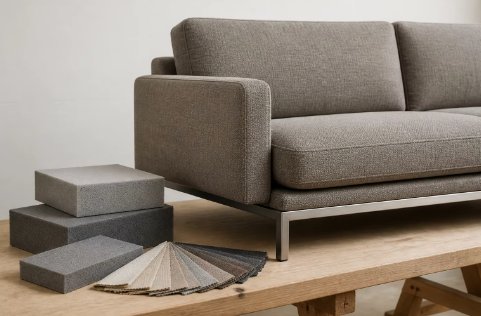
The UK government is consulting on reforms to the Furniture and Furnishings (Fire) (Safety) Regulations 1988, with the stated aim of reducing reliance on chemical flame retardants in upholstered furniture. The confirmation came in a written answer in the House of Lords on 3 June 2026.
Answering a written question about the flame retardant TCPP, the government stated: "The Department for Business and Trade is currently consulting on reforms to the Furniture and Furnishings (Fire) (Safety) Regulations 1988 to meaningfully reduce the reliance on chemical flame retardants in the manufacture of upholstered furniture while maintaining a high level of fire safety."
The question, tabled on 14 May 2026 by Baroness Bennett of Manor Castle and answered on 3 June 2026, raised Tris(1-chloro-2-propyl) phosphate (TCPP), describing it as classified by the International Agency for Research on Cancer as "probably carcinogenic in humans" (Group 2A). The answer also set out the existing employer duties under the Control of Substances Hazardous to Health Regulations 2002, noting that in foam manufacture substitution with less hazardous chemicals "remains an important consideration".
The 1988 regulations have long been a condition of selling upholstered furniture into the UK, and they are one reason UK-bound sofas often differ in specification from the same model sold elsewhere. If reform genuinely reduces the requirement for chemical flame retardants, the change would run through the whole specification chain: foam grade, barrier fabrics, cover treatments and the test documentation that accompanies a shipment. For exporters, the practical exposure is dual. A supplier that keeps building to the current requirement will not be wrong today, while one that has already developed lower-additive constructions may have an advantage when the rules move.
Track the consultation rather than waiting for the final instrument, since specification decisions have long lead times.
Ask foam and fabric suppliers which flame-retardant route each option uses, and record it per SKU.
Identify at least one lower-additive alternative per core sofa model so a change in the rules does not force a redesign.
Keep test documentation and certificates filed with the order, as UK buyers increasingly ask for them at quotation stage.
Sources:
General information for furniture buyers, not legal advice. The consultation was ongoing at the time of writing; verify the current position before changing a specification.




Copyright www.hzfgfurniture.com. All Rights Reserved. 浙ICP备2026006019号
