

-
Download
Certificate Query
Certificate Query

 2026/9/17 17:01:03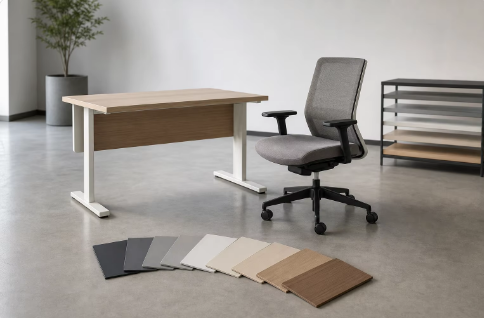
Importers and contract dealers weigh sample requests against programme risk, because a sample is both a cost and a decision point. These five questions cover when a physical sample earns its place, what a chair or desk sample actually proves, the time and money involved, what to test before approving, and how to hold production to the approved piece.
A sample earns its cost when the decision cannot be made from drawings and photographs: a new chair model you have never sold, a bespoke finish match, a mechanism you need to test by hand, or a first order large enough that one bad assumption is expensive. Skip it for repeat items from a supplier with a proven record. Where budget is tight, ask for one sample that covers the riskiest element rather than samples of every SKU.
It proves build quality, material feel and finish, not durability. A sample shows how a gas lift moves, whether an edge band is clean, how a mesh back flexes, whether a drawer runner glides and whether the colour reads as intended in daylight. It cannot prove cycle-test endurance, long-term foam compression or finish wear over years of use. Ask separately for the test reports and tolerances behind the durability claims.
For a catalogue item, expect one to three weeks including freight; a custom finish or branded piece usually takes three to five weeks because of colour matching or artwork setup. Samples are normally charged at unit price or a small premium, and freight is usually at your cost. Many suppliers credit the sample fee against the first bulk order, so ask whether the credit applies, at what order volume, and whether it expires.
Set the sample up as the end user will meet it. Sit in the chair at the intended height for a working session, check the armrest adjustment range, and confirm the seat depth suits the target market. On desks, load the frame, raise and lower it several times, and check cable management access. Verify the exact finish code, hardware pack and packaging method, then photograph the approved piece from every angle and record its specification in writing.
Turn the approved sample into a signed specification, not just a retained object. The document should fix the finish code, material grades, foam density, mechanism model, hardware and packaging, and it should state what tolerance is acceptable. Keep one sealed reference sample at the factory and one at your own office. Ask for batch photographs before shipment, and agree that bulk goods will be checked against the retained sample, not against a new one.
Bottom line: A sample is only worth paying for when it settles a decision that drawings cannot, and only valuable while bulk production is measured against it.




Copyright www.hzfgfurniture.com. All Rights Reserved. 浙ICP备2026006019号
