

-
Download
Certificate Query
Certificate Query

 2026/9/17 16:41:10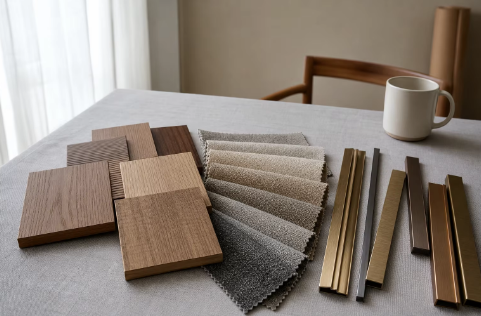
A finish sample is a small physical panel showing one material or coating; a mock-up room is a full-size room where every finish is seen together under real lighting. The sample proves the surface itself — grain, sheen and stain depth. The mock-up proves the combination: how the veneer reads against the carpet, the upholstery against the wall, and the metal trim against both. Hotel projects need the sample approved first and the mock-up second.
A practical minimum is three identical sets: one signed and retained by the buyer, one kept by the factory, and one held on site for receiving checks. Large or phased projects commonly add a spare set for the interior designer and a reserve panel in case an on-site copy is damaged or lost. Where a finish appears in both public areas and guest rooms, order a separate panel for each application.
The interior designer owns the aesthetic decision; the owner or their representative owns the commercial one. Sign-off should happen on the physical sample before bulk production, not after. On hotel work the usual sequence is designer approval, then owner confirmation, then a written production release. Where a mock-up room is in scope, final sign-off moves into that room, because finishes that passed separately on a panel sometimes fail together in a lit space.
Record the material code, substrate, coating system, sheen level and supplier reference, then photograph the sample under a stated light source and attach it to the purchase order. Note the acceptable visual range, not only the target, so batch variation has a defined limit. Sign and date every panel, and state where each set is stored. An approval that exists only as an email with an image is difficult to enforce at receiving.
The first step is a side-by-side comparison under neutral light against the signed reference panel, never a photograph. If the difference sits inside the recorded tolerances, the batch is normally accepted. If it falls outside, the buyer can request refinishing, replacement or a price adjustment. Catching this at pre-shipment inspection is far cheaper than catching it on site, because a container already cleared through customs is expensive to return.
Bottom line: A signed, dated physical sample with recorded tolerances is the only finish reference a buyer can actually enforce during production.




Copyright www.hzfgfurniture.com. All Rights Reserved. 浙ICP备2026006019号
