

-
Download
Certificate Query
Certificate Query

 2026/9/17 16:29:36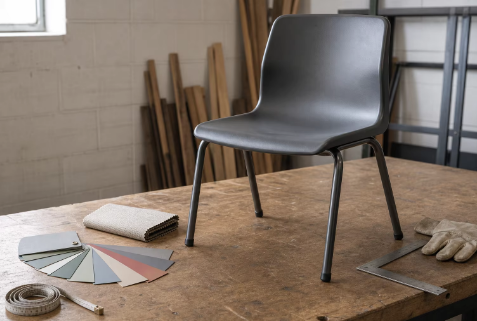
Yes, for school furniture you should expect to pay. Samples are made on real tooling with real materials, so the supplier has cost in them, and most factories charge the sample price plus courier. The common arrangement is a sample fee that is credited back against the bulk order once it is placed, often when the order passes a set value. Ask for that credit in writing before paying.
Allow 10 to 20 days for a standard desk or chair built from existing tooling and stock materials, and four to six weeks when new tooling, a custom color or a bespoke dimension is involved. Add courier time. A sample made inside the existing range is often faster than the quote suggests, while a fully bespoke one can slip if the tooling is not yet finished. Confirm the date when you place the sample request.
It proves that the factory can build the item to your drawing with the specified materials, and that the geometry, hardware and finish match what was agreed. It also gives you something physical to test — stability, seat height adjustment, load capacity and edge finish. It does not prove that mass production will be identical, that packaging is right, or that the whole batch will pass inspection; those need their own controls.
Check it against the specification line by line, not by feel. Verify overall dimensions and seat height range with a tape, check frame wall thickness and weld quality, operate every moving part and locking mechanism, confirm the finish matches the approved color chip under daylight, and inspect edge banding and shell thickness. Set the sample beside your old furniture, load it the way students will when tilting it back, and check the underside of the desk top where screws enter.
The approved sample must be tagged and sealed with a signed approval sheet that lists the drawing revision, material grades, color codes, hardware, finish and packaging. Photographs of the reversed sample marked with the date and the buyer's signature are minimum evidence. Keep one counter-sample at the factory and one at your end. Any change after approval — material substitution, supplier change or a cosmetic tweak — should restart approval rather than pass unnoticed.
Bottom line: A sample is only worth the paperwork behind it — physically approved, signed, sealed and photographed, with any later change sent back through approval.




Copyright www.hzfgfurniture.com. All Rights Reserved. 浙ICP备2026006019号
