

-
Download
Certificate Query
Certificate Query

 2026/9/11 17:15:32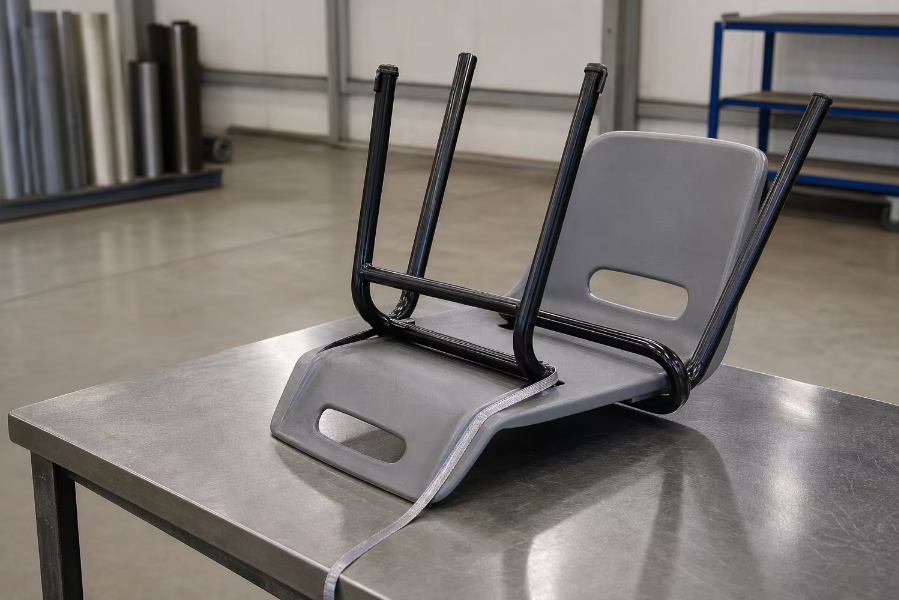
School furniture inspection works best when it begins long before the container is loaded. The first control point is a signed pre-production sample that fixes the reference for everything that follows: moulding colour, frame tube thickness, seat shape, edge radius and finish. Buyers should keep that sample, or a photo set of it, alongside the order so that later batches can be compared against a single agreed reference rather than a verbal description.
An in-line check performed while production is still running catches problems when they can still be corrected. On steel frames, look at weld penetration and grinding at the joints, then at coating coverage — bare metal at a cut tube end will rust before the product reaches a classroom. On hardware, verify that bolts, inserts and locking mechanisms are tightened to the agreed torque and that thread engagement is consistent across units.
Load and function checks confirm the unit behaves as specified: seat deflection under a distributed load, stability when weight is placed on one edge, and smooth operation of any folding or height-adjustment mechanism. A packing audit is the last gate — confirm carton grade, corner protection, hardware bagging and that the per-SKU label matches the carton contents. Every stage should be recorded with dated photographs and a written report, so a buyer who cannot attend the factory still receives evidence of what was checked and what was found. Where a supplier allows it, a third-party inspection before loading gives an independent view of the same checkpoints and reduces the risk of disputes after arrival.
Lock the specification with a signed pre-production sample before mass production starts.
Check weld penetration and coating coverage at joints and cut tube ends.
Confirm bolt torque and thread engagement, not just the presence of hardware.
Ask for a photo-documented inspection report with dated records per stage.




Copyright www.hzfgfurniture.com. All Rights Reserved. 浙ICP备2026006019号
