

-
Download
Certificate Query
Certificate Query

 2026/9/11 16:25:51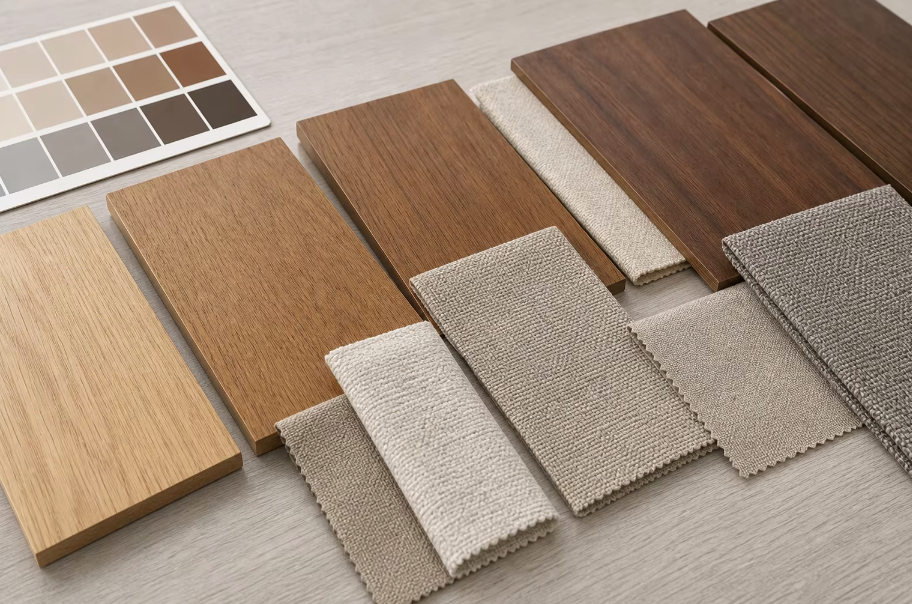
Colour is a moving target in any factory. Timber absorbs stain differently from log to log, veneer slices from the same flitch shade slightly apart, and powder coating and lacquer shift as pigment lots, spray parameters and curing conditions change. None of this indicates a defective product; it is normal manufacturing variation that becomes a problem only when nobody has agreed the acceptable range.
The real risk appears across project phases. Lobby furniture delivered in one quarter and guest room furniture in the next may come from different batches, different lines or different sub-suppliers, and the difference is only visible when the pieces stand in the same room.
The master sample is the contract's colour reference, and it should be a physical, signed and dated item rather than a photograph. It needs to be large enough to judge grain direction and sheen, and it should be produced with the same substrate and coating process as production.
Reference panels should then be stored in more than one place. One set stays with the project team, one travels to the factory, and ideally one stays on site. Panels kept in sunlight, near heat or in damp storage change themselves, so they need a dry, dark home.
Batch planning is the most effective control available. Rather than ordering room by room as phases release, group the full requirement for matched finishes, such as all guest room casegoods or all public area joinery, into a single production batch where volume and schedule allow.
Where one batch is impossible, the next best approach is to reserve finished material. Ordering the full project's worth of a critical finish at the outset and releasing it phase by phase keeps colour identical even when delivery is staged; confirm with the factory how that reserve will be stored and how long the finish remains stable.
Even a well-controlled project will need repairs, so touch-up pens, stain markers and matching edge banding supplied with the first delivery let site teams correct minor transit damage. Finally, write down how colour will be judged before production begins: which light, which viewing angle and who signs. Visual assessment under a consistent neutral light, against the approved master, is far more reliable than comparing delivery photographs.
Colour variation is normal; unmanaged variation is what damages a project.
Approve a physical master sample and store reference panels in at least two locations.
Batch matched finishes by phase, or reserve material from one production run.
Agree the inspection light, viewing method and sign-off owner in advance.




Copyright www.hzfgfurniture.com. All Rights Reserved. 浙ICP备2026006019号
