

-
Download
Certificate Query
Certificate Query

 2026/9/4 17:17:54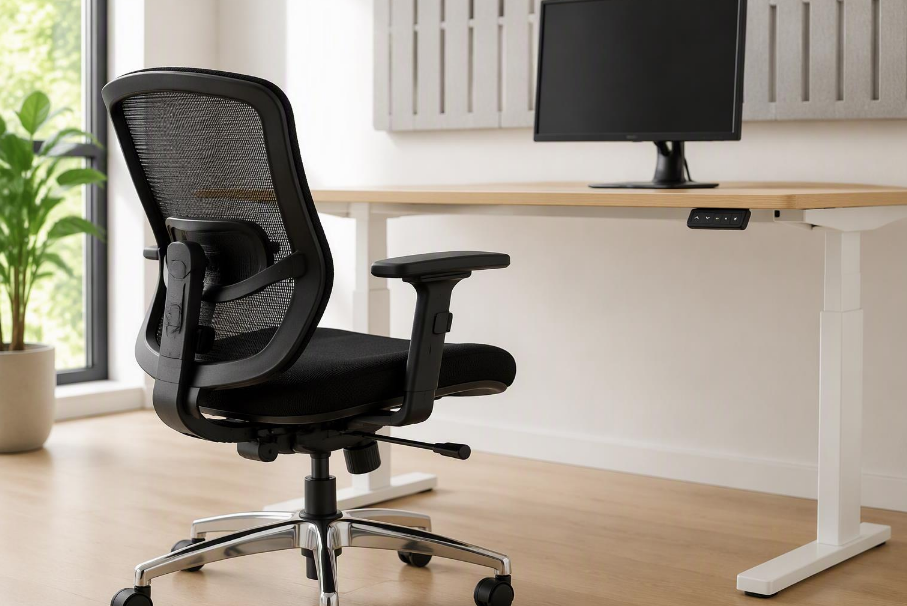
Support comes from adjustability — and not all adjustability is equal:
Seat height and depth. Height adjustment is standard; seat depth adjustment (moving the seat pan forward and back) is essential for proper thigh support across different body sizes.
Backrest height and lumbar support. The backrest should adjust vertically, with lumbar support that aligns with the natural curve of the lower spine.
Armrests. Height-adjustable armrests — ideally also width- and depth-adjustable — prevent shoulder strain during typing.
Tilt and recline. A synchronized tilt mechanism that moves seat and backrest together, with adjustable tension, supports natural movement rather than locking users in place.
Simple controls. Adjustments should work from a seated position without tools; complex mechanisms that are hard to use end up unused.
Gas lift and base. A certified gas lift and a stable five-star base with hard-wearing castors that suit your flooring.
Cushion quality. High-density foam that holds shape over years of daily use.
Fabric and materials. Breathable, durable upholstery rated for intensive use.
Test standards. Reputable manufacturers test to recognized office furniture standards (such as BIFMA in North America or equivalent regional standards); ask for test documentation rather than accepting claims at face value.
Height-adjustable desks vary enormously in engineering:
Motor system. Dual-motor systems generally lift heavier loads more smoothly and quietly than single-motor units.
Weight capacity. Match capacity to your actual desk load — monitors, arms and equipment add up quickly.
Speed and noise. Listen to the desk lift under load; smooth and quiet operation signals better engineering.
Height range and memory. Ensure the range covers seated and standing use for your tallest and shortest employees, with programmable presets for quick transitions.
Stability. Test wobble at standing height — a desk that shakes undermines both typing comfort and perceived quality.
Warranty. Motors and electronics should carry meaningful warranty terms; ask what is covered and for how long.
Test with real users. Demo chairs and desks with employees before large orders — comfort is individual, and user feedback predicts adoption.
Budget by need. Invest in premium task chairs for intensive users; lighter seating may suit short-duration roles.
Specify one system. Standardizing on a single chair and desk program simplifies service, spare parts and future expansion.
Ergonomic furniture is an investment in people — the largest operating cost in any office. Contact our office furniture team for specification guidance, samples and volume programs for chairs, desks and sit-stand systems.




Copyright www.hzfgfurniture.com. All Rights Reserved. 浙ICP备2026006019号
